Seamless gutters in Pittsburgh, PA
Seamless gutters and gutter guards keep water moving. Gutters and downspouts decide where the water goes when it leaves your roof. On Pittsburgh hills, that water can end up against a foundation wall or in a neighbor's yard. Whether you need to install new gutters or plan a gutter replacement, we fit seamless aluminum gutters sized for your roof and move the water where it belongs. We handle guttering repairs and new seamless gutters, so one crew handles both.
Rough guide: $9 to $16 per foot
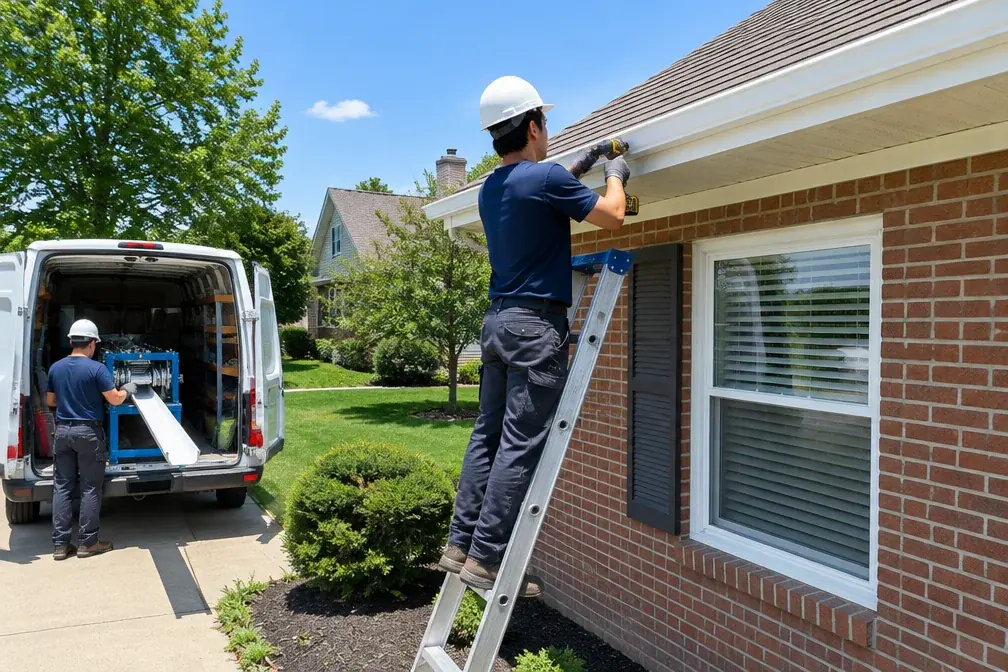
Why seamless
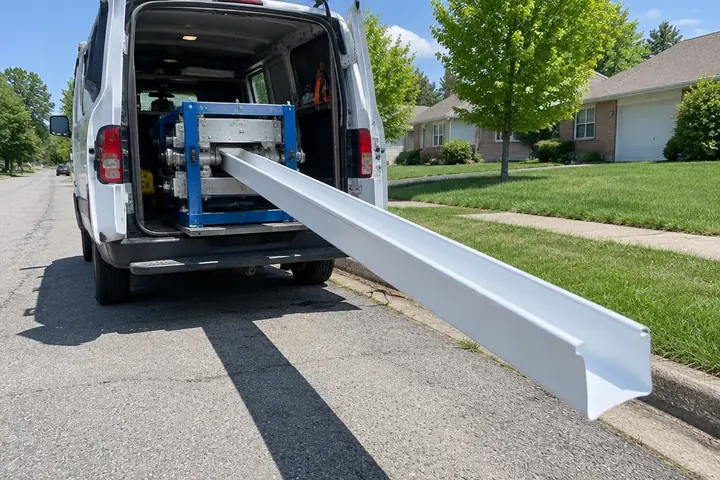
Sectional gutters leak at their joints, and those joints are where they fail. A seamless gutter installation uses a coil of aluminum formed on site, cut to the exact length of each run, so the only joints are at the corners and outlets. We hang them on hidden hangers driven into solid wood and pitch them toward the downspouts.
- 5 and 6 inch seamless aluminum gutters
- Larger 3 by 4 inch downspouts
- Gutter guards
- Downspout extensions and tie-ins
- Fascia repair behind the gutter
- Replacing old steel and copper-look gutters
Sizing for steep Pittsburgh roofs
Steep roofs throw water faster, and valleys concentrate it into one corner of the gutter. On many of the taller homes here we recommend 6 inch gutters and larger downspouts, because they handle cloudbursts and clear leaves better. If water keeps overshooting one corner, a small diverter or a heavier outlet usually solves it.
Gutter guards, and box gutters
If you have big oaks or sycamores overhead, gutter guard installation with a good micro-mesh guard can pay for itself, and it saves ladder work on a tall house. If you have few trees, you may not need them. We will tell you which applies.
Older homes often have built-in box gutters that sit inside the roof edge. They look great, but when the lining fails they leak directly into the wall. We can reline them or, where you prefer, close them in and fit a hanging gutter.
Gutter installation cost and gutter replacement cost
Most new rain gutters around Pittsburgh cost $9 to $16 per foot installed. That rate applies to a rain gutter installation on a new addition or a rain gutter replacement on an older home, and it includes downspouts and removal of the old gutters. Height, corners and any fascia repair move the price.
| Job | Typical price |
|---|---|
| Seamless gutter installation, one-story house | $900 to $1,800 |
| Gutter replacement, two-story house | $1,500 to $3,000 |
| Gutter guard installation | $6 to $14 per foot |
| Gutter repair, section or downspout | $150 to $500 |
| Box gutter relining | Priced by the job |
How the work goes
- Measure the runs
We check the roof area, pitch, fascia and where the water drains.
- Fix the fascia
Any rotted wood is replaced so hangers have something solid to grip.
- Form on site
Gutters are formed from a coil to the exact length of each run.
- Water test
We check the pitch and outlets with water before we leave.
Common questions
How much does it cost to replace gutters?
Seamless aluminum gutters usually run $9 to $16 per foot installed. Most Pittsburgh houses come to $1,200 to $3,000, depending on height and the number of corners.
How long do gutters last?
Aluminum gutters commonly last 20 years or more. Copper can last far longer. Vinyl usually gives you less in our freeze-thaw weather.
Are seamless gutters worth it?
Usually, yes. Fewer joints means fewer leaks and less upkeep, and the price difference over sectional gutters is often small once installed.
Is gutter guards worth it?
If you have heavy tree cover or a tall house, usually. If you have few trees and can clean gutters safely, you can often skip them.
Do roofers install gutters?
We do. It often makes sense to do both together, since drip edge and gutters have to work as a system.
Do aluminum gutters rust?
No. Rust is corrosion of iron and steel, and aluminum has no iron in it. It can still corrode where water runs onto it from copper flashing or gutters, so the two metals shouldn't drain into each other.
Do you need gutters on your house?
On almost every Pittsburgh house, yes. Without them, roof water drops right next to the foundation, and on a hillside lot it can end up in the basement.