Box gutters in Pittsburgh, PA
Box gutters are built into the roof edge of many older Pittsburgh houses, hidden behind a wood or brick cornice so the eave looks clean from the street. With a sound lining they work for decades. When the lining splits, the water goes straight into the cornice and the wall below, often long before anyone sees a stain inside.
Priced by the job
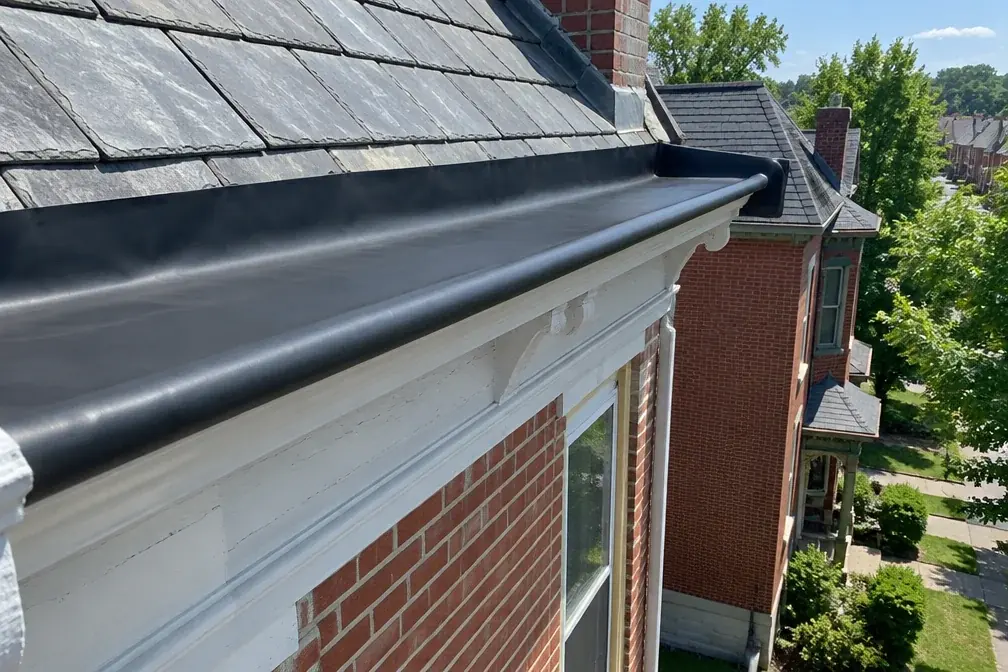
What box gutters are
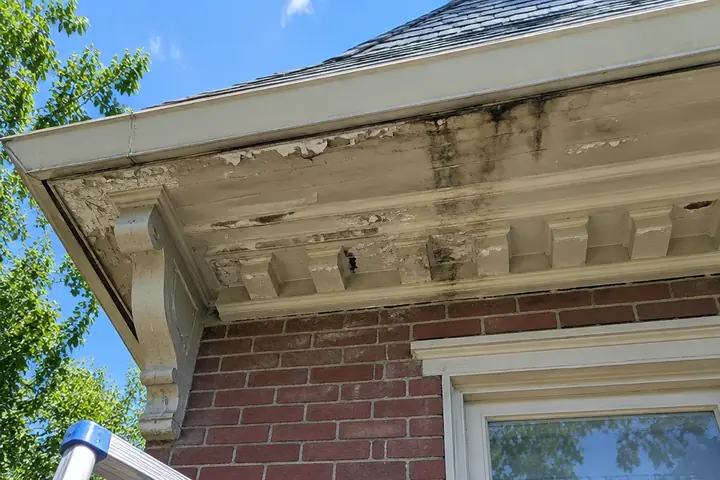
A box gutter is a wooden trough built into the roof structure at the eave, lined with sheet metal or a membrane and drained through an outlet to a downspout. A Yankee gutter is a close cousin: a raised wood dam built on the lower part of the roof slope itself and lined the same way. Both were common on the larger houses built here from the late 1800s into the 1920s, and you still find them on many older homes in Shadyside, Wilkinsburg and the city's other older neighborhoods.
The National Park Service's guidance on historic roofs notes that built-in gutters work well when they are maintained, but if the slope is poor or the outlets clog, water pools and can leak into the roof structure and the walls. That is how box gutters fail on Pittsburgh houses: an outlet packed with leaves in the fall, then a winter of freeze and thaw working at the seams.
Reline, rebuild or close in
There are three ways of fixing box gutters that have started to fail. The right one depends on the wood underneath and on how much the look of the cornice matters to you.
- Reline. If the wood trough is sound, a new lining goes in: EPDM rubber membrane, or new metal such as copper or terne-coated stainless steel.
- Rebuild. Rotted boards in the trough or cornice are cut out and replaced, the slope toward the outlet is corrected, then the gutter is relined.
- Close in. The box gutter is covered over and roofed, and a hanging seamless gutter takes the water. It costs less, but it changes how the eave looks.
Metal or rubber linings
Copper is the traditional lining. The National Park Service recommends heavier 20 or 24 ounce copper for gutters and valleys, compared with 16 ounce as the minimum for flashing, because thin metal wears through under the grit that rainwater carries. Terne-coated stainless steel is the modern stand-in for old terne, and it does not need painting. Our copper roofing page covers copper work in more detail.
An EPDM rubber lining costs less and copes well with freeze and thaw, as long as it is fully adhered, runs up under the roofing at the back and wraps over the front edge. Whatever the lining, it should not touch other metals in the water path, because copper with steel or aluminum makes one of them corrode.
Box gutters on older Pittsburgh homes
Many box gutters here sit behind brick or wood cornices on three-story houses, so access takes planning: tall ladders, scaffold, and sometimes a lift on a narrow street. Box gutters often block air intake at the eaves as well, so we look at roof ventilation while we are up there.
If your home is in a City of Pittsburgh historic district, closing in a box gutter changes what the street sees, so ask the city about review before you choose that route. Relining in place keeps the original look.
What box gutter work costs
Box gutter work is priced by the job, because the length, the state of the wood and the access vary so much from house to house. We look first, photograph the gutter and the cornice, and give you one fixed written price for each option you are weighing.
How the work goes
- Look from the inside out
We check the gutter, outlets and cornice, and the attic and walls below for water.
- Photos and options
You see the lining and the wood, with a written price for each option.
- Repair the wood
Rotted trough and cornice boards are replaced, and the slope to the outlet is set.
- Reline and water test
The new lining goes in under the roofing at the back, then we run water through it.
Common questions
What are box gutters made of?
A wooden trough built into the roof edge, lined to hold water. Older linings are usually terne or tin-plated steel, or copper. Newer ones are often EPDM rubber or terne-coated stainless steel.
Do box gutters leak?
They do once the lining splits or an outlet clogs. Because the gutter sits inside the roof edge, the water runs into the cornice and the wall instead of over the front. Regular cleaning and a sound lining keep them dry.
Can box gutters be replaced?
Yes. They can be relined, rebuilt with new wood and a new lining, or closed in with a hanging gutter fitted below the roof edge. Relining keeps the original look of the house.
How often should box gutters be cleaned?
At least twice a year, in late spring and after the leaves drop in the fall. Under big trees, check the outlets after storms too, because one clogged outlet can fill the whole gutter.
How to reline box gutters?
The old lining comes out, rotted wood is replaced and the slope to the outlet is checked. The new lining, either rubber membrane or soldered metal, runs up under the roofing at the back and over the front edge, and the outlet is sealed into it. It is high, careful work, so most homeowners hire a roofer for it.
More roofing services
- repairs from our Pittsburgh roofers
- new roofs from our roofers
- help with roof leaks
- emergency roofers
- slate roofers in Pittsburgh
- rowhouse rubber roofs
- metal roofing in Pittsburgh
- small commercial roofs
- seamless gutters in Pittsburgh
- soffit and fascia work
- roof inspection in Pittsburgh
- ice dam removal
- roof ventilation
- copper roofing and gutters